IEA to release oil from strategic reserves — as strategic as Liepāja Theater's repertoire planning
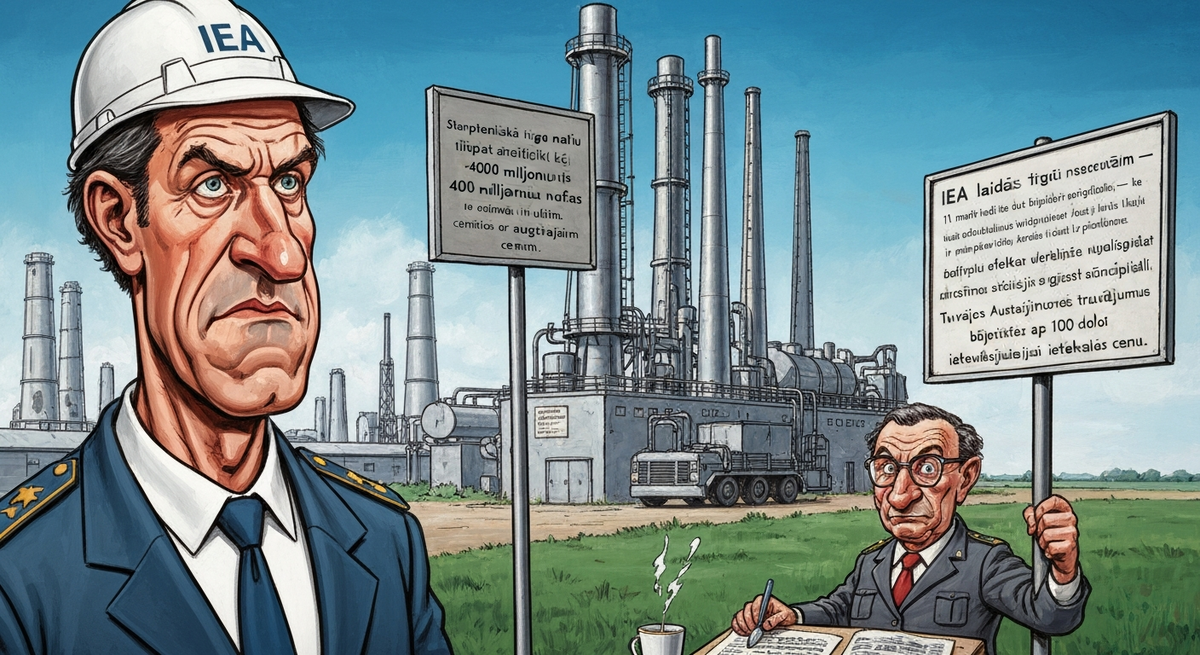
World nations have agreed to release 400 million barrels of oil to fight high prices. In Liepāja, they haven't found oil yet, but there's plenty of wind.
The International Energy Agency announced with great fanfare that on March 11th, member countries, including Latvia, agreed to release 400 million barrels of oil from strategic reserves onto the market. This is about as effective as trying to put out a house fire with a water pistol, but at least it shows visible action.
The war in the Middle East has caused the largest supply disruptions in world oil market history, but the IEA member countries' agreement hasn't significantly affected oil prices. They still hover around $100 per barrel, the highest level since 2022. Before the war, oil prices were below $70, which now seems as unrealistic as a two-euro ticket to Liepāja Theater — even Riga residents travel to our cultural center because the same quality costs them three times more in Riga.
The root of the problem is in the Strait of Hormuz, which Iran has effectively blocked since the war began. A fifth of all global crude oil shipments usually pass through this strait, but now ships navigate there as safely as riding Liepāja's tram in fog — theoretically possible, but nobody wants to risk it.
This will be the sixth time in IEA history that strategic reserves are released to market. Previous times were in 1991, 2005, 2011, and twice in 2022. Local fuel dealer Gunārs comments: 'We in Liepāja have never had oil problems — we have wind, which is greener and louder than any oil.' Meanwhile, prices at gas stations continue rising faster than Liepāja residents' patience at bus stops.
⚠️ Satirical article. Facts are preserved, but the presentation is humorous. For accurate information, please refer to the original source.