Trump wants to transform NATO into an exclusive club where voting rights are given based on money — like in the VIP zone at Liepāja rock music festival
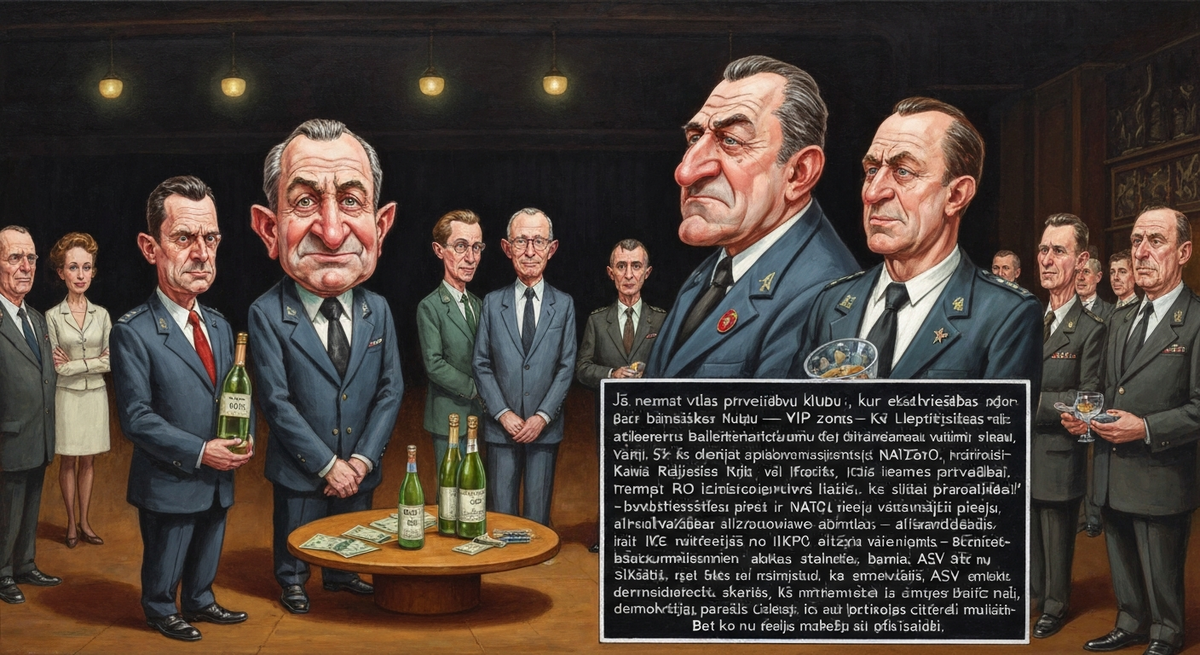
The US president is considering stripping NATO countries of voting rights if they don't spend enough on defense, creating a situation where democracy operates on a pay-to-play principle.
While Riga is still pondering whether NATO is good or bad, Trump has already devised a revolutionary approach to alliance management — voting rights only for those who pay at least 5% of GDP on defense. It's like a NATO VIP zone where entry is based solely on your bank account balance.
"You can't give voting rights on future spending to those who don't make their contribution," explains a US source, apparently forgetting that democracy usually works differently. But what do we know — maybe the US has discovered a new political science where more money means more democracy.
Particularly surprised in this situation are Spain and the UK, which the US considers insufficiently solvent allies. It's like at the Liepāja rock music festival, where VIP ticket holders decide the repertoire, while regular ticket holders can only listen and clap. Except this time it's about nuclear weapons, not whether to play "Smoke on the Water."
Germany, meanwhile, risks losing US military presence, which would be an ironic twist considering that's exactly where the US deployed its forces to prevent European wars. Now it turns out peace is too expensive, and it's better to withdraw troops home where you can save money and watch Europeans solve their own problems.
NATO Secretary General Mark Rutte can now prepare for the summit in Ankara, where he'll have to explain how the 5% target is achievable without driving the alliance to bankruptcy. But the main question remains — can democracy really be bought by the kilogram, or has the US simply been watching corporate meeting protocols for too long.
⚠️ Satirical article. Facts are preserved, but the presentation is humorous. For accurate information, please refer to the original source.