North Korea reveals its secret: rocket engines work similarly to Liepāja ice hall heating system
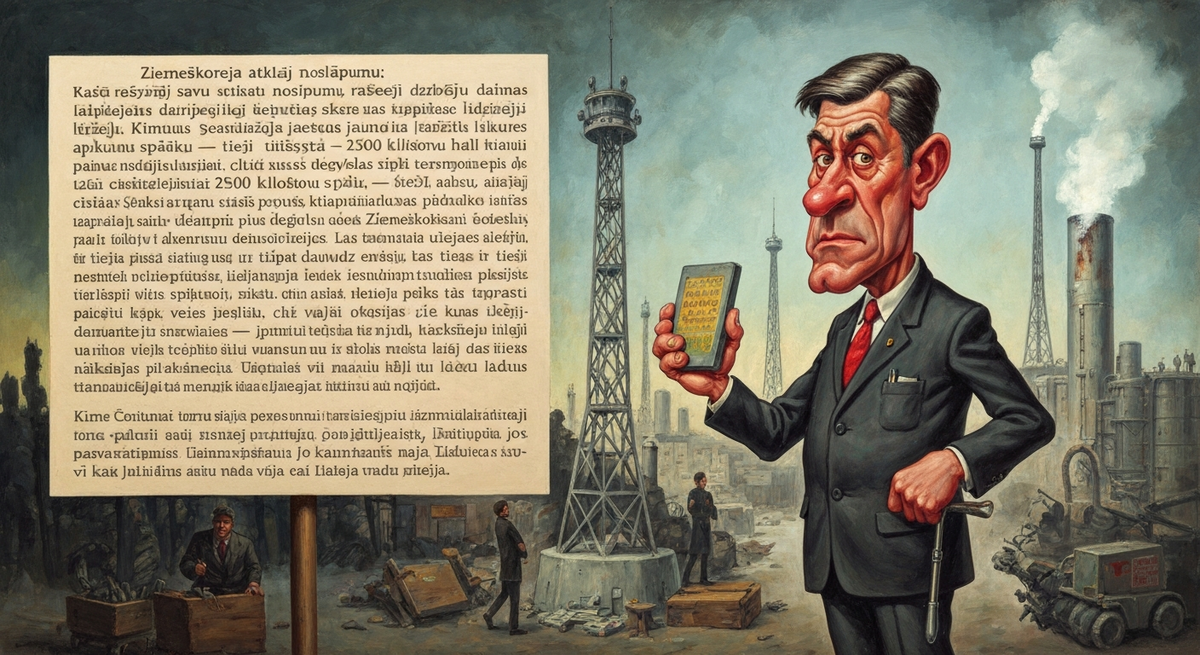
Kim Jong Un personally tested the new solid fuel engine that develops 2,500 kilonewtons of force — exactly as much as needed to heat Liepāja's ice hall to normal temperature.
North Korea this week demonstrated its latest technological marvel — a solid fuel rocket engine capable of developing 2,500 kilonewtons of thrust. To understand this power, just imagine: that's exactly as much energy as needed to maintain a temperature in Liepāja's ice hall where hockey players don't feel like mammoths during the Ice Age.
Kim Jong Un personally supervised the test because, as he explained to the KCNA agency: "I like things that work faster than Riga's public transport." Compared to the previous engine that developed only 1,971 kilonewtons, the new model is 529 kilonewtons more powerful — exactly enough to overcome the resistance created by Riga's residents disbelief that anything outside Riga could work better.
Experts point out that solid fuel engines allow rockets to be launched faster because they require less preparation time. "It's like the difference between how long it takes to get from Karosta to downtown on foot versus by bicycle," comments local military expert Jānis Putniņš from Grobiņa.
Pyongyang's propaganda agency hasn't revealed the test location or time, but eyewitnesses report that fire and smoke were visible even from space — almost as bright as on Liepāja's winter evenings when the city turns on street lighting.
⚠️ Satirical article. Facts are preserved, but the presentation is humorous. For accurate information, please refer to the original source.